Land Clearing Without the Debris Hauling
Forestry Mulching in Mt. Horeb and surrounding areas for properties with overgrown fence lines and dense hillside vegetation
Standing brush and small trees across South Central Wisconsin's driftless terrain get converted into ground-level mulch when heavy equipment mulching is applied correctly. Tim Post Services handles forestry mulching across properties where traditional tree removal would leave debris piles requiring multiple hauls. Property owners managing fence line encroachment or preparing land for new use end up with cleared ground and an erosion-reducing mulch layer that stays in place.
The process targets vegetation that blocks property access or complicates boundary maintenance, using equipment that grinds standing material where it stands rather than felling and hauling. Properties across Sauk County, Richland County, Grant County, Lafayette County, and Green County frequently deal with regrowth typical of post-glacial hill country, where dense understory returns quickly without mechanical intervention.
Schedule a property evaluation to identify which sections require mulching and what equipment access routes will work.
What Proper Forestry Mulching Requires
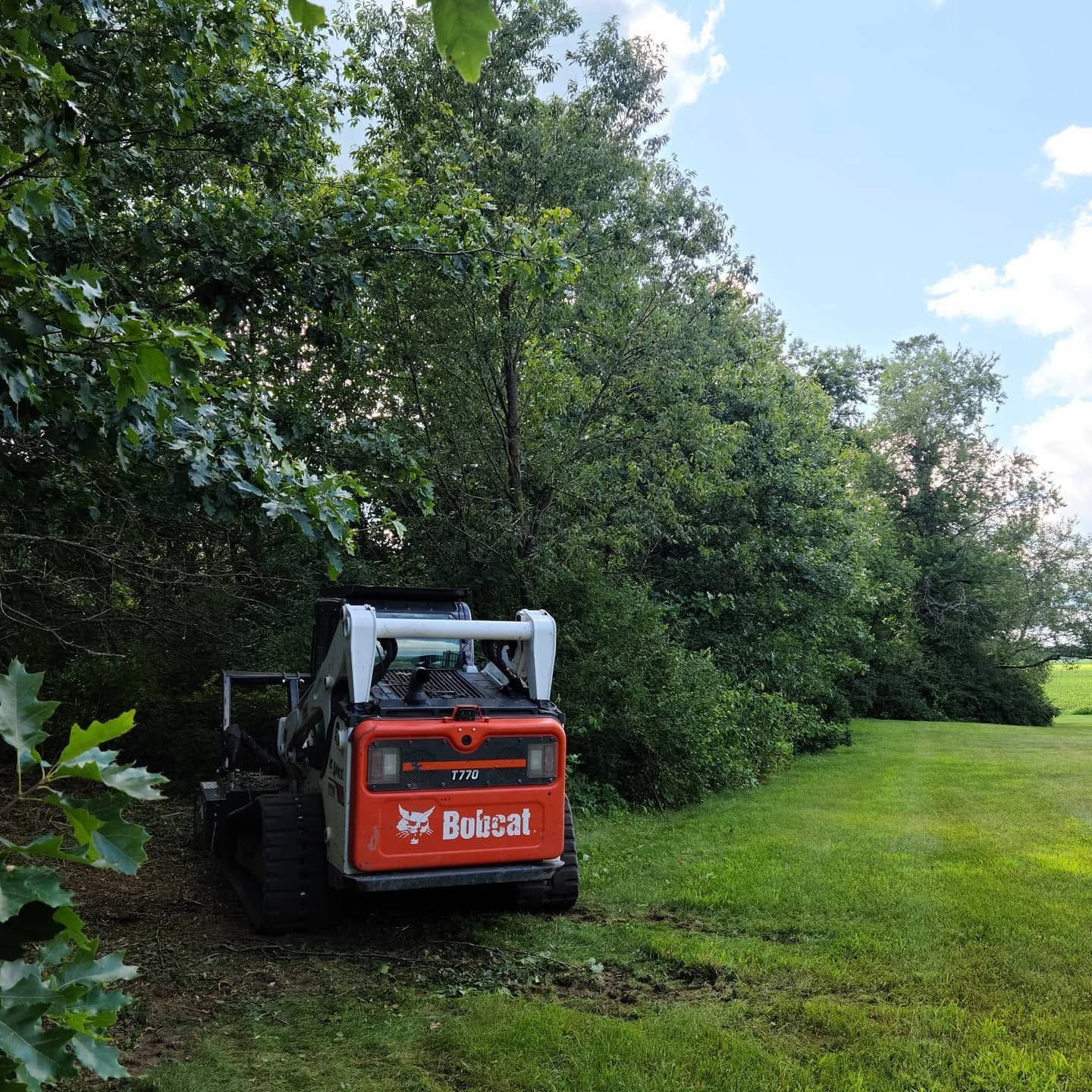
Equipment selection depends on vegetation density and terrain slope, but the core process involves driving a rotating drum with carbide teeth through standing brush and trees up to nine inches in diameter, although it can handle larger trees depending on the condition of the wood. Material gets shredded and deposited, eliminating the need for follow-up cleanup. Operators adjust ground speed based on vegetation thickness to prevent equipment bogging and ensure complete material processing.
After mulching, the property shows cleared ground with a consistent layer of organic material that suppresses regrowth and holds soil on slopes. Fence lines become accessible for maintenance, and previously obstructed areas open up for grazing, planting, or building. The mulch layer settles within weeks and begins decomposing, adding organic matter back into the soil rather than leaving bare, exposed ground vulnerable to erosion.
Mulching works for vegetation management but not stump removal, so properties with large established trees requiring full extraction need different equipment. The method handles brush encroachment and small timber efficiently but cannot process root systems or stumps below ground level.
What Landowners Typically Ask
Questions about forestry mulching often focus on what the process handles and what remains after the work is finished.
What size vegetation can forestry mulching handle?
Equipment processes brush and trees up to nine inches in diameter, converting standing material into mulch without requiring separate hauling, which makes it effective for dense understory and fence line overgrowth common across hillier driftless terrain.
How long does the mulch layer last after clearing?
The mulch settles and begins decomposing within a few weeks, suppressing regrowth for one to two growing seasons depending on vegetation type and soil moisture, giving you time to establish desired plantings or manage the area with less frequent maintenance.
When is the best time to schedule forestry mulching?
Late fall through early spring works well because frozen or firm ground supports heavy equipment without rutting, and dormant vegetation processes more cleanly, though urgent clearing around Mount Horeb often happens whenever weather and ground conditions allow equipment access.
Does mulching damage the underlying soil structure?
The process leaves soil intact because equipment does not dig or disturb root zones, and the mulch layer protects against compaction and erosion better than bare ground would after traditional clearing.
What happens to the mulched material after the job?
It stays on-site as ground cover, breaking down naturally and adding organic matter back into the soil without requiring removal or disposal off the property.
Properties across South Central Wisconsin's hill country often need vegetation management that accounts for terrain and regrowth patterns. Tim Post Services provides equipment-based mulching designed for driftless area conditions. Request a site assessment to determine equipment access and project scope for your property.