Farm Boundaries Without Traditional Clear-Cutting
Agricultural Forestry Mulching in Mount Horeb for pasture boundaries and crop field edges
Hillier agricultural terrain across the driftless zone requires vegetation management that preserves soil integrity while clearing pasture and crop boundaries. Mulching equipment converts brush, small timber, and field vegetation into usable ground cover without the erosion risk that traditional clear-cutting creates on sloped farmland. Operators adjust equipment speed and cutting depth based on vegetation density to prevent soil disturbance while processing standing material in a single pass. Tim Post Services provides forestry mulching tailored to farm properties across Sauk County, Richland County, Grant County, and Lafayette County, where multi-generational farming operations manage land with steeper grades than glaciated regions to the east.
The process handles brush encroachment along fence lines and field edges, leaving a mulch layer that suppresses regrowth and protects soil during heavy rain. Properties transitioning between grazing and crop use benefit from clearing that does not require debris hauling or leave bare ground vulnerable to runoff.
Schedule an evaluation to determine which field boundaries require mulching and what equipment will access the site safely.
Why Equipment-Based Mulching Works for Farmland
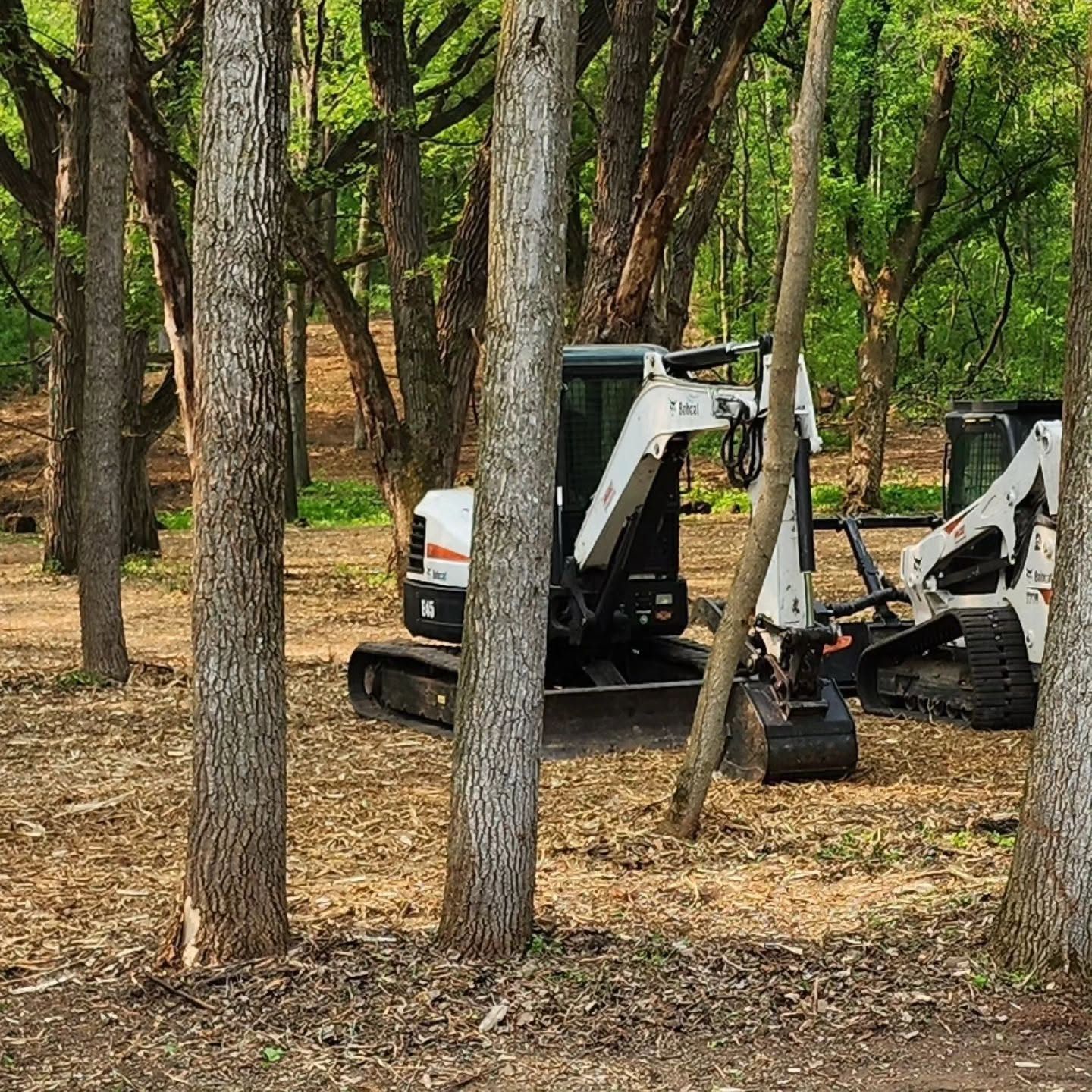
Agricultural forestry mulching uses rotating drums with carbide teeth to shred vegetation where it stands, depositing processed material as ground cover that holds moisture and prevents weed germination. Equipment operators work along fence lines and field edges without crossing planted areas, targeting vegetation that encroaches on grazing space or obstructs farm equipment movement. The mulch layer decomposes over one to two growing seasons, returning organic matter to the soil rather than requiring removal.
After mulching, pasture boundaries become clearly defined, and livestock access improves where brush previously blocked movement. Crop field edges show clean transitions without the rutting or soil piles that excavation-based clearing creates. The mulch layer stabilizes slopes and reduces erosion during spring runoff, which matters significantly on driftless terrain where topsoil loss affects long-term productivity.
Mulching does not remove root systems or stumps, so fields requiring complete vegetation eradication need different approaches. The method focuses on above-ground clearing that maintains soil structure while restoring usable farm acreage.
Answers to Frequent Service Questions
Farmers managing vegetation along boundaries often ask about timing, equipment impact, and material handling.
What size vegetation can agricultural mulching equipment process?
Equipment handles brush and trees up to six inches in diameter, converting standing material into mulch without separate hauling, which works well for fence line saplings and field edge overgrowth typical on Wisconsin farms.
How does mulching affect soil compared to traditional clearing?
Equipment stays on the surface without digging or excavating, leaving soil structure intact and depositing mulch that prevents compaction and erosion rather than exposing bare ground to weather.
When should farms schedule mulching to avoid crop interference?
Late fall after harvest or early spring before planting allows equipment access without crossing active fields, and frozen ground supports heavy machinery better than saturated soil during wet seasons common in Mount Horeb.
Does the mulch layer interfere with livestock grazing?
Livestock avoid freshly mulched areas initially but graze around them once the mulch settles, and the layer breaks down within one to two seasons without creating long-term grazing obstacles.
What happens to the mulched material over time?
It decomposes naturally, adding organic matter and nutrients back into the soil while suppressing regrowth and protecting against erosion during the breakdown period.
Driftless area farms require vegetation management that accounts for slope and soil protection alongside clearing efficiency. Tim Post Services handles agricultural forestry mulching for properties where traditional methods risk erosion or require excessive debris hauling. Contact us to review field boundaries and schedule mulching that fits your farm operation timeline.